Bobcat
Scientific Classification
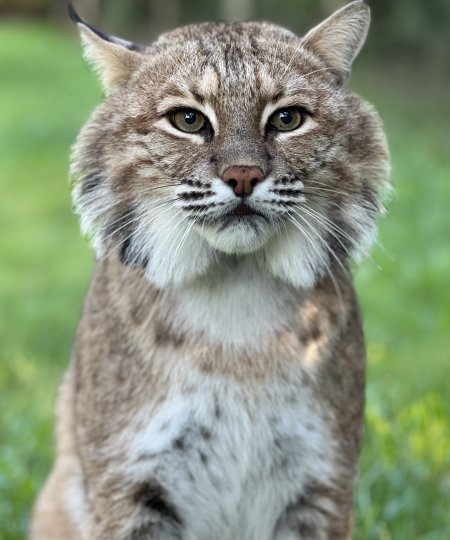
The mass of a Bobcat can vary between 4 to 18kg (9 to 40lbs), and their length can range from 50 to 105cm (20 to 41 inches), with males normally larger than females. Their pelts can vary between geographic regions and biomes; Reddish-brown coated variants are found in their Eastern and Northwestern range, Grey coated ones are in the Southeast, and the more Tawny-brown coats are also found in the East, in addition to the Southwest and Western ranges. Darker and more spotted coats are more common in mountainous areas while lighter coats are more prevailent in arid and semi-arid ecosystems. Aside from the differing coats, they can sometimes have a diffused spotted pattern along their back, and their undersides are white in colouration. Most notable are their short tails, which is where they get their names, which can come in at 9 to 20cm (3.5 to 8 inches) and sport a black tip with a white underside. Their ears have tiny tufts on the tips and are black on the backside, while the sides of their face have sideburn-like tufts of fur
Bobcats are found in the majority of the North American continent. In Canada, they reside in the southern portions of most provinces, with exception to Newfoundland and Labrador. Aside from Canada, they can also be found in the northern half of Mexico and the majority of the continental US. They are currently extripated from the more urbanized parts of Southern Ontario, in addition to the US side of the Great Lakes Region. Despite being widespread across the continent, they are seldom seen due to being nocturnal animals. Bobcats are extremely versitile when it comes to habitat preferences, being found in deserts, forests, mountains, scrublands and wetlands. They have even been known to show up in urban and rural environments on rare occasions. Bobcats will usually den in a rocky or cavernous den, though they have also been known to shelter in brush piles, tree hollows or rodent burrows.
As a feline, they are strict carnivores. Their diet mostly consists of Hares, but will also hunt various species of Rodents. Other prey items include birds, and when food is scarce, they will try to hunt down White-tailed Deer. They have been known to be a greivance to farmers by occasionally hunting and consuming Poultry and other small domestic animals.
As solitary predators, Bobcats only interact with one another during the breeding season in early spring. Bobcats are most vocal during this time, emitting occasional yowls and hisses. Once courtship and mating has commensed, the male and female Bobcats will split off, leaving the female Bobcat to raise the young on her own. In the meantime, she will gestate for a bit over 2 months before giving birth to a litter of 1 to 6 kittens in a reclusive den, though the average number of kittens born is usually 3. Bobcat kittens will nurse from their mother for the first two months of their life. Once they are weaned, the mother will bring smaller live prey such as mice, allowing for her young to learn how to hunt. 6 to 8 months after birth, during the autumn and winter months, the young will separate from their mother to fend for themselves. Female Bobcats become sexually mature after the first year, with males becoming sexually mature the following year. The lifespan of a wild Bobcat is 10 to 14 years, but can double that lifespan while in captivity. While adult Bobcats are rarely predated on, they can still be hunted down by Cougars and Wolves, while kittens are additionally predated on by Foxes, Coyotes, and larger Bird of Prey species.
Bobcats are solitary nocturnal hunters, spending the dusk and nighttime hours alone while skulking for prey. Like most feline species, their acute eyesight and hearing aid in those endeavours. They are adept climbers, though they prefer to hunt on the ground. Bobcats will hunt their prey by stalking them silently during darker hours before lunging at them, dispatching their prey with a bite to the neck. Bobcats will mark their territory using claw marks on trees and through the scent marking with feces and urine