Emu
Scientific Classification
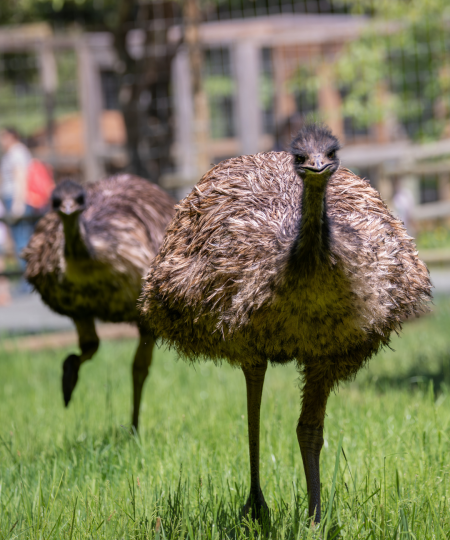
A tall bird with small, useless wings, emus are mostly brown in colour. They reach heights of 1.9m (6.2ft) and weigh between 30-55kgs (66-121lbs). Females are slightly larger than the males. Emus have long legs with 3 toes on each foot. A pouch in the throat allows the emu to communicate via a deep drumming sound which can be heard for 2km (1.2mi).
Native to mainland Australia, emus avoid urban areas, dense forests, and deserts. Emu farms are found throughout North America.
Omnivores, the emu diet varies depending on the season. They eat seeds, shoots, leaves, and small insects.
Usually a solitary bird, emus form breeding pairs in the summer and the female lays a clutch of 5-15 eggs in the fall. Emu eggs are large, weighing up to 650g (1.4lbs), and dark green in colour. Once the eggs are laid the female leaves and the male incubates the eggs for 8 weeks, moving only to turn the eggs. The chicks are ready to leave the nest about 3 days after hatching; they will stay with their father for up to 18 months.
The emu is the only bird in the world with calf muscles. These powerful muscles allow them to sprint at up to 50kph (31mph). They have two eyelids. One for opening and closing, and the other for keeping dust out in their very dusty and windy environment. Emu have heavy feet and nails that they use to run but also to scratch and tear flesh if they have to defend themselves from predators such as dingoes.