North American Elk
Scientific Classification
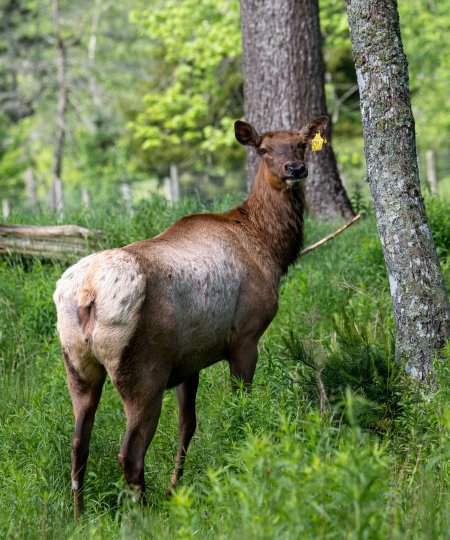
A male elk (bull), is larger than the female (cow), and can stand 1.5 m (5 ft) tall at the shoulder and weigh over 360 kg (800 lb). While coat colour varies from reddish-brown in summer to dark brown in the winter, elk are easily identified by their distinctive pale rump. Elk also have a dark mane around the neck and unique upper canine teeth known as eyeteeth. Like other deer species, mature males grow an impressive set of antlers each year.
In Canada, elk are native to the western provinces and are commonly seen in the foothills of the Rocky Mountains.
North American elk are herbivorous ruminants with a four-chambered stomach. They feed on grasses, plants, leaves, and bark, which they chew twice during their digestive process.
Elk stay in single-sex groups for most of the year, but when rutting season begins in early autumn males will compete for harems by vocalizing (bugling), strutting past each other, and wrestling for dominance. Bull elk also scrape shallow holes in the ground, urinate in them, roll in the scent, and then parade past their collected females. After gestating for 8-9 months, cows isolate themselves to give birth, usually to a single calf as twins are rare. Cows return to the herd when their calf is about 2 weeks old. Young elk grow quickly, reaching nearly adult size in 6 months while remaining in their mother’s care for the first year. Predators of elk include bears, wolves, coyotes, and cougars.