Brown Anole Lizard
Scientific Classification
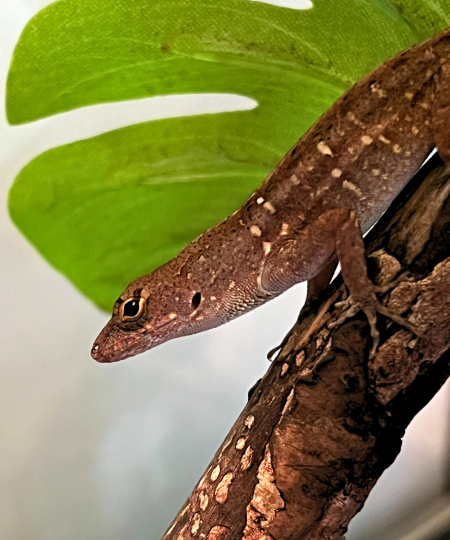
These anole reptiles grow between 5–9 inches, with adult males being larger and more robust than adult females. Mature females tend to have subtler patterning and lack the prominent dewlap seen in adult males. Their skin varies from light gray to chocolate brown, often marked with black patterns and a ridge along the tail tip.
The native range of the brown anole extends over much of the Caribbean, including Jamaica, Cuba, the Cayman Islands, and other countries. Currently, they are considered an invasive species in parts of Florida in the United States, including the Florida Keys, Dade County, Broward County, and Palm Beach County. Today, their range has extended as far as Georgia and through Texas to parts of Mexico. It is believed that these lizards were unintentionally brought to the area in cargo shipments for the Caribbean
Brown anoles feed on a wide variety of prey, including insects, spiders, and other lizards such as skinks and geckos.
During the mating season, which typically occurs during the warmer months, female brown anoles deposit eggs in soil or leaf litter. The female anole selects suitable sites in leaf litter for oviposition. Each adult female lays one or two eggs per clutch, but she produces many clutches throughout the year. Baby brown anoles hatch fully independent. Juvenile anoles grow quickly, often reaching sexual maturity within a year.
Brown Anoles use camouflage to blend in amongst dense vegetation
They can also "drop their tails", which means they detach their tails to escape predators.