Ostrich Fern
Mi'kmaq Name: Ma'susi (pronounced mah-soo-see)
Scientific Classification
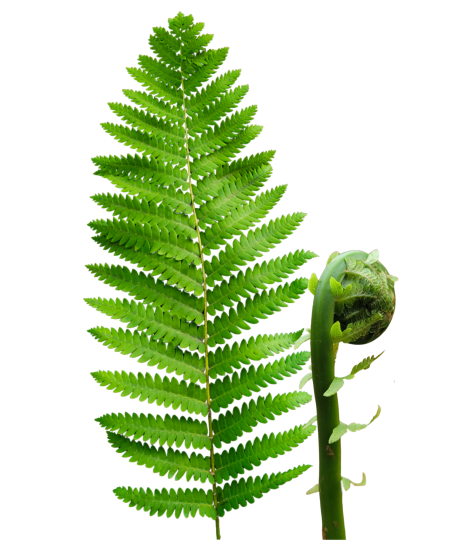
The Ostrich Fern is a green plant with several stems, with each leaf being made up of many leaflets that become smaller toward the tip. Leaves stand upright or droop downward depending on the size of the plant. The leaflet’s shape is defined by many small segments that give it a feathery appearance, hence the Ostrich Fern’s name. Ostrich ferns can grow between 0.6 to 1.5m (2-5ft) tall, with leaves about 12 to 40cm (4.5-15.5in) wide.
The Ostrich Fern is distributed across temperate regions of the Northern Hemisphere, including Europe, Asia, and North America. In North America, it is found throughout Canada and in the northeastern United States (from North Dakota down to Virginia). Ostrich Ferns thrive in shaded areas in a variety of soils as long as it’s moist, making freshwater shores (lakes, streams) and wetlands (swamps, marshes) ideal habitats. They are also commonly cultivated as ornamental plants.
Ostrich Ferns are autotrophs, meaning they create their own food (sugars) using sunlight, water, and carbon dioxide through photosynthesis. They are not known to have any unusual soil nutrient requirements.
The life cycle of the Ostrich Fern begins when it releases its spores into the wind. When these spores contact moist soil, they germinate and grow into an intermediate phase that can fully develop into a new fern if fertilized. Ostrich Ferns live year-round (perennial), with its aboveground parts dying back in the winter while its underground stem system (the rhizome) survives and will regrow come spring.
To protect its developing leaflets, new fern leaves emerge from the soil as a tightly curled “fiddlehead”. As they mature, the large surface area of the Ostrich Fern likely helps it capture sunlight in shaded environments. This is advantageous because these shaded areas have less competition from other plants and retain more moisture than unshaded areas.
In Mi'kmaq culture, Ostrich ferns are harvested as fiddleheads in the spring as one of the first plants gathered after winter and valued for their rich vitamins and nutrients. Harvesting fiddleheads reflects respect for seasonal cycles and reminding us of renewal and the importance of caring for the land for future generations.
Ferns are ancient! They are almost 400 million years old, existing 150 million years before the first dinosaurs.
Ostrich Fern fiddleheads are one of few wild plants that are harvested commercially for consumption.
Ostrich Ferns are often planted to help mitigate soil erosion due to their dense root structure.
The Ostrich Fern Borer Moth, as its name suggests, survives solely on the stems and roots of the Ostrich Fern as a caterpillar, and can be found in northeastern North America.
Ostrich ferns provide ample shade and hiding places for smaller animals such as birds, amphibians, and rodents.